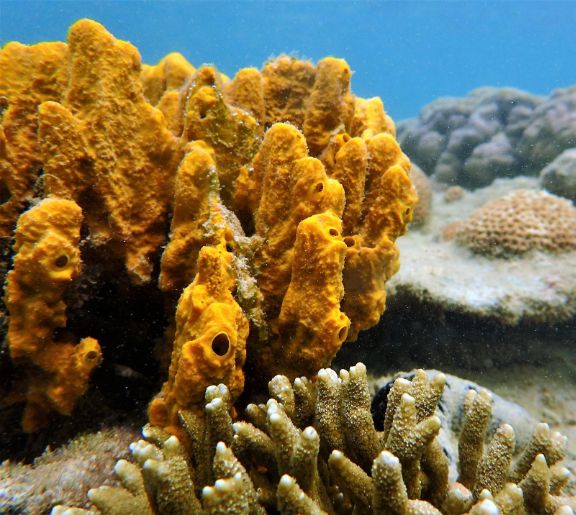
Similar to corals, sea anemones, and giant clams, the sponges have a symbiotic relationship with zooxanthellae. Besides these tiny little algae, sponges are homes for marine organisms such as sea snails, shrimps, fishes, and brittle stars. Can you believe a 2 meters tall sponges is a comfy shelter for 16, 000 shrimps? Sponges may synthesize toxic to prevent them to be eaten, yet there are still animals which chemically undefended to take sponges as their food, such as hawksbill turtles and nudibranchs.
Sponges are soft-body animals. How can they become reef builders? Coral reefs and sponges are known to thrive in poor-nutrition ocean areas because the symbiotic relationship with zooxanthellae forms the plant-based food chain. The sponges play biological roles on coral reefs such as harboring tremendous species of animal and plant symbionts and influencing ocean water chemistry.