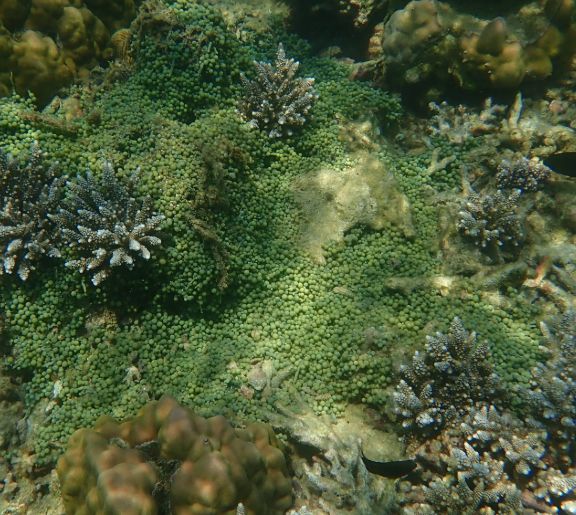
Seaweed are also known as macroalgae. They can come in many different shapes and colors. In general, seaweed can be classified into three categories that are brown algae, green algae and red algae. Seaweed is an important food source in the underwater communities. Organisms such as crab, sea urchins and sea turtles consume seaweed as a source of energy.
Apart from being a source of food for marine organisms, seaweed are also included in many dishes especially Asian dishes. In Malaysia, a seaweed species, Caulerpa lentifera is a popular dish known as Latok. According to the FAO, production and consumption of seaweed has been constantly increasing. Hence, it is important to preserve and conserve our seaweed.