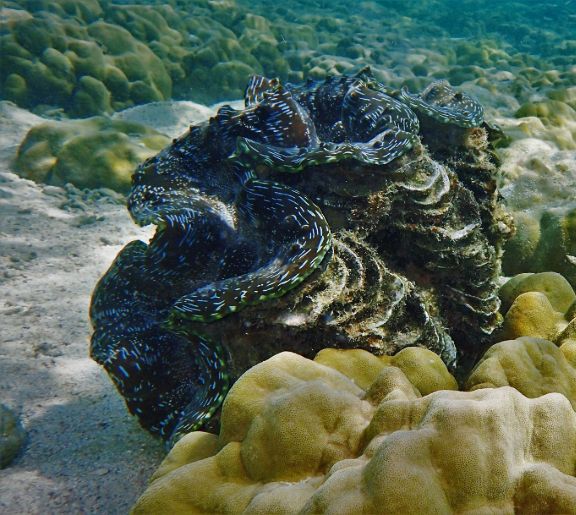
Giant Clams

These largest bivalves are sessile, peaceful, and can live in the ocean for over 100 years! Their large scutes and mantle cavity provide shelter for smaller animals. The giant clams lives in lagoons, patch reefs, reef flats, and steep walls. You can easily find them when you are snorkeling and scuba diving in Pulau Kapas. However, please do not touch them. Giant clams have interesting life history. As they are sessile, they adopt broadcast spawning. They release sperms and eggs into the water. Their embryos are free-swimming trocophore larva. After that, they will find a shallow area of the reef to settle into. Giant clams are filter feeders. They have two siphons (holes) on their mantles, which is an inhalant siphon and an exhalant siphon. They are fed on dissolved organic compounds and planktons.

At the same time, their mantle tissues act as a habitat for the zooxanthellae (single-celled diniflagelate) and as return, the zooxanthallae provide nutrition from the process of photosynthesis to the giant clams This is called symbiotic relationship. The zooxanthellae provide color to the mantles, so the same species of giant clam could have variety color of mantle. The large scutes and mantle cavity of giant clams provide shelter for other small animal such as little crabs, shrimps, clams, and other invertebrates.

Unfortunately, the populations of wild giant clams are decreasing. Giant clams are facing serious threats from coral reef degradation, anthropogenic stress, and unsustainable coastal development. Giant clams are also harbored for their flesh and shells