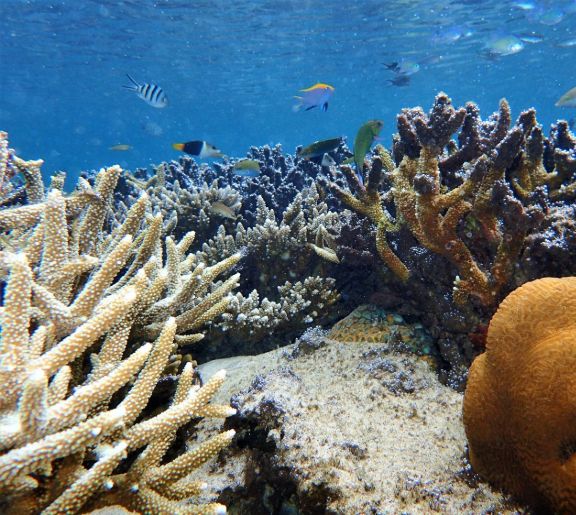
Coral

Coral are colony animals consisting from hundreds to thousands of genetically identical polyps and they considered as primary consumer as they eat marine detritus using their stinging tentacles. They also gain food from symbiotic relationship with zooxanthellae. Many misconceptions on coral is that due to their sessile characteristics (that is their lack of movement or locomotion), corals are often misunderstood as plants. However, coral do not produce their own food. Instead, they gain food from the photosynthesis process of the symbiotic algae that lives in them. To add, coral also feed on detritus and small planktons. There are two types of coral in general: the hard coral and the soft coral. The hard coral possess a skeleton enforced by calcium carbonate, while soft coral do not possess any skeletal structure. However, soft corals are often supported by another type of cell called spiracles, though it is not as hard as hard coral skeleton, hence the name soft coral. Examples of soft corals are sea fans and carnation corals.

There are about 6000 known species of corals in the world. Corals have a diverse habitat range but the most coral populated area is The Coral Triangle, consisting of countries such as Indonesia, Malaysia, Philippines, Papua New Guinea, Timor Leste and the Solomon Islands.

Although reef building coral thrives in shallow and subtropical waters, there are also species of corals that live in the deep ocean. Deep sea corals do not live off algae and sunlight, instead they are opportunistic feeders in which they trap and consume any small organic materials or organisms that pass through.